
www.healthit.gov: Sneak Preview of ONC site for non-geeks
Reply

A Special Meeting for Health Information Exchange Initiatives
Accessed on June 16, 2011 and excerpted from eHealth Initiative.
The 2011 National Forum on Health Information Exchange will take place Thursday, July 14, 2011 at the Omni Shoreham Hotel in Washington DC. The HIE Forum will convene healthcare leaders from across the 50 states to discuss the challenges and best practices needed to achieve sustainable national health information exchange. It will also coincide with the release of the 2011 eHI HIE Survey. Interactive panels comprised of health information exchange experts who are in the field will be the primary focus of the event. The majority of the event will include question and answer sessions for audience members.
Transforming Healthcare Through Analytics
Analytics is one of the most exciting and promising areas for HIE innovation. HIEs can provide in-depth analytics to help providers manage patients, control costs and improve quality. Analytics can be used for predictive modeling, real-time point of care decision support, managing population health, quality reporting and comparative effectiveness research. This panel will include payers and HIEs that have experience working in this area.
How HIEs can Work with the Direct Project
This panel will explore the implementation challenges associated with the Direct Project, as well as the potential benefits that can be derived from it. The group will discuss how the Direct Project will help providers and hospitals qualify for meaningful us and encourage health information exchange. Additionally, Providers, patients, and other stakeholders in the delivery of healthcare across the country can be connected through the infrastructure of the Nationwide Health Information Network (NwHIN). While NwHIN is not a physical network, HIEs are moving towards using the standards, SSA disability determination, justifications, and other protocols set by NwHIN.
Insurance Exchanges and HIE: Coordinating Efforts for Success
Following the passage of health reform, states are now in the process of creating health insurance exchanges. Both HIE and Insurance Exchanges require significant effort, resources and focus. Coordination and competing for resources is a challenge. This panel will examine the efforts underway in several states.
Getting to Meaningful Use Through HIE
In preparation for Stage 2 of Meaningful Use, providers and hospitals must begin to prepare for increasing HIE requirements. HIEs will need to determine how they can support hospitals and providers in meeting the new requirements. Included in this topic will be immunization registries, and the stage 2 MU requirements.
Staying Alive in 2011: Different Revenue Models for Sustainability
Creating a sustainable business model remains the greatest challenge facing organizations. New models of sustainability have been suggested in the last couple of years, including utility models. Attaining sustainability is still an enormous hurdle. This panel will include speakers who use different revenue models. They will address best practices for HIE sustainability.
IT Infrastructure Required to Support ACO
With the advent of Accountable Care Organizations, health information exchange is even more critical. ACOs will need to coordinate care, manage patient health, and track administrative data. Panelists will discuss established HIEs can position themselves to support ACOs.
AGENDA for National Forum on HIE: July 14, 2011
Excerpts. For complete agenda, click here.
To register, click here.
| 7:00 AM Registration Exhibit Hall Open – Breakfast and Networking |
||||||||
| 8:30 – 9:00 AM Welcome, Overview and 2011 HIE Survey Key Findings
|
||||||||
| 9:00 – 9:30 AM Keynote
|
||||||||
| 9:30 – 10:30 AM Transforming Healthcare Through Analytics
|
||||||||
| 10:30 – 11:00 AM Break |
||||||||
| 11:00 – 12:00 PM How HIEs can Work with the Direct Project
|
||||||||
| 12:00 – 1:00 PM Lunch |
||||||||
| 1:00 – 2:00 PM Insurance Exchanges and HIE: Coordinating Efforts for Success
|
||||||||
| 2:00 – 3:00 PM Getting to Meaningful Use Through HIE
|
||||||||
| 3:00 – 3:30 PM Break |
||||||||
| 3:30 – 4:30 PM Staying Alive in 2011: Different Revenue Models for Sustainability
|
||||||||
| 4:30 – 5:30 PM IT Infrastructure Required to Support ACO
|
||||||||
| 5:30 – 7:30 PM Reception |
For latest and complete information on eHI National Forum, click here.
Investing in Innovations
Accessed from ONC on June 12, 2011
In September 2009, President Obama released his Strategy for American Innovation, calling for agencies to increase their ability to promote and harness innovation by using policy tools such as awards and competitions. The America Competes Act, passed in December 2010, permits any agency head to “carry out a program to award prizes competitively to stimulate innovation.” With this authority, ONC has created the Investing in Innovations (“i2″) program.
Investing in Innovations is a two-year contract with Capital Consulting Corporation and Health 2.0 that will disburse more than $1.9 million in prize money to competition winners in up to 30 challenges. Competition proposals will derive from internal ONC staff and fellow HHS agencies.
ONC believes that competitions have a number of potential benefits. Under the right circumstances, they may allow the government to:
The competitions will focus on innovations that support (1) the goals of HITECH and clearing hurdles related to the achievement of widespread Health IT adoption and meaningful use, (2) ONC’s and HHS’ programs and programmatic goals, and (3) the achievement of a nationwide learning health system that improves quality, safety, and/or efficiency of health care.
For questions relating to the Investing in Innovations program, please email Wil Yu.
Additional Resources
HHS and The Office of the National Coordinator for Health Information Technology introduce new Investing in Innovations (i2) Initiative
Press Release from Department of Health and Human Services on June 8, 2011
Washington, D.C. — The Office of the National Coordinator for Health Information Technology (ONC) announced today the Investing in Innovations (i2) Initiative – a bold new program designed to spur innovations in health IT. The program centers on prizes and competitions to accelerate the development of solutions and communities around key challenges in health IT.
This landmark initiative is the first Administration-wide program using prizes and challenges to advance an agency’s mission made possible by the America COMPETES Reauthorization Act of 2010, signed into law by President Obama on Jan. 4, 2011. The Act invests in innovation through research and development and seeks to improve the competitiveness of the United States.
As part of the initiative’s rollout, ONC has awarded nearly $5 million to the Capital Consulting Corporation (CCC) and Health 2.0 LLC, to fund projects supporting innovations in research and encouraging health IT development through open-innovation mechanisms like prizes and challenges.
“The initiative demonstrates ONC’s recognition of the importance of investing in innovations and provides a platform that will attract an expanded community of innovators to the full range of the agency’s programs. It opens the door to new opportunities for open collaboration from a wide range of diverse individuals and organizations that will increase the national rate of innovation and adoption of health IT as we improve health care of all Americans,” said Farzad Mostashari, M.D., Sc.M., national coordinator for health information technology.
The i2 Initiative will consult stakeholders across the health care sector including hospitals, doctors, consumers, payers, states, employers, advocates, and relevant federal agencies to obtain direct input on execution and to build partnerships.
The core of the i2 Initiative is an effort to use prizes and challenges to facilitate innovation and obtain solutions to identified health IT challenges. Recognizing the promise of prizes and challenges, the President has called on agencies to promote innovation by using such innovation tools to address intractable problems. The use of prizes and competitions is widely regarded as a powerful tool to attract innovators from all walks of life to address hard problems with the added benefit of only rewarding best-in-class work. The approach makes possible rapid response to emerging issues that are difficult to address with more traditional funding approaches.
Examples of health IT competition topics developed in consultation with CCC and Health 2.0 LLC, include the following:
Another component of the i2 Initiative will support analysis of the current health IT environment in an effort to track and model clusters of innovation, while simultaneously identifying connections between disparate innovator communities. The effort will identify technology development trends in a fast-moving sector to inform future advisory and policy-making activities.
Capital Consulting Corporation, Health 2.0 LLC, along with other contributors will help provide detailed and up-to-date analysis of relevant, emerging innovations and associated trends that will help ONC and other HHS agencies better understand these developments, as well as the issues that surround them.
ONC recognizes that policies that do not appropriately anticipate technological change can jeopardize success by potentially limiting competition and setting in stone inferior technologies. Accurate and timely information from this phase of the initiative will enable the Federal government to engage in methodical and strategic health IT policies.
“Through the i2 Initiative, ONC is directly supporting innovation in health IT to accelerate the nation’s progress toward a high-performing, adaptive health care system,” said Wil Yu, the special assistant for innovations within ONC.
For more information please visit ONC’s home page at http://healthit.hhs.gov/portal/server.pt/community/healthit_hhs_gov__onc/1200.
###
HHS and The Office of the National Coordinator for Health Information Technology introduce new Investing in Innovations (i2) Initiative
Press Release from US Department of Health and Human Services on June 8, 2011
Washington, D.C. — The Office of the National Coordinator for Health Information Technology (ONC) announced today the Investing in Innovations (i2) Initiative – a bold new program designed to spur innovations in health IT. The program centers on prizes and competitions to accelerate the development of solutions and communities around key challenges in health IT.
This landmark initiative is the first Administration-wide program using prizes and challenges to advance an agency’s mission made possible by the America COMPETES Reauthorization Act of 2010, signed into law by President Obama on Jan. 4, 2011. The Act invests in innovation through research and development and seeks to improve the competitiveness of the United States.
As part of the initiative’s rollout, ONC has awarded nearly $5 million to the Capital Consulting Corporation (CCC) and Health 2.0 LLC, to fund projects supporting innovations in research and encouraging health IT development through open-innovation mechanisms like prizes and challenges.
“The initiative demonstrates ONC’s recognition of the importance of investing in innovations and provides a platform that will attract an expanded community of innovators to the full range of the agency’s programs. It opens the door to new opportunities for open collaboration from a wide range of diverse individuals and organizations that will increase the national rate of innovation and adoption of health IT as we improve health care of all Americans,” said Farzad Mostashari, M.D., Sc.M., national coordinator for health information technology.
The i2 Initiative will consult stakeholders across the health care sector including hospitals, doctors, consumers, payers, states, employers, advocates, and relevant federal agencies to obtain direct input on execution and to build partnerships.
The core of the i2 Initiative is an effort to use prizes and challenges to facilitate innovation and obtain solutions to identified health IT challenges. Recognizing the promise of prizes and challenges, the President has called on agencies to promote innovation by using such innovation tools to address intractable problems. The use of prizes and competitions is widely regarded as a powerful tool to attract innovators from all walks of life to address hard problems with the added benefit of only rewarding best-in-class work. The approach makes possible rapid response to emerging issues that are difficult to address with more traditional funding approaches.
Examples of health IT competition topics developed in consultation with CCC and Health 2.0 LLC, include the following:
Another component of the i2 Initiative will support analysis of the current health IT environment in an effort to track and model clusters of innovation, while simultaneously identifying connections between disparate innovator communities. The effort will identify technology development trends in a fast-moving sector to inform future advisory and policy-making activities.
Capital Consulting Corporation, Health 2.0 LLC, along with other contributors will help provide detailed and up-to-date analysis of relevant, emerging innovations and associated trends that will help ONC and other HHS agencies better understand these developments, as well as the issues that surround them.
ONC recognizes that policies that do not appropriately anticipate technological change can jeopardize success by potentially limiting competition and setting in stone inferior technologies. Accurate and timely information from this phase of the initiative will enable the Federal government to engage in methodical and strategic health IT policies.
“Through the i2 Initiative, ONC is directly supporting innovation in health IT to accelerate the nation’s progress toward a high-performing, adaptive health care system,” said Wil Yu, the special assistant for innovations within ONC.
For more information please visit ONC’s home page at http://healthit.hhs.gov/portal/server.pt/community/healthit_hhs_gov__onc/1200.
###
Perpetually Perplexed by Regulatory Interpretations? Separate the Fact from Fiction
June 10, 2011, 2:45 pm /Posted by Steven Posnack, Director Federal Policy Division, ONC, on ONC’s Health IT Buzz blog and republished by e-Healthcare Marketing here.
If enough people believe something, it has to be true, right? In my travels, I’ve found that regulatory interpretations range from being largely factual to wildly fictitious. The latter often results from misinterpretations of regulatory language, improper combinations of regulatory language from different rules, or accurate interpretations getting lost in translation as they are passed from person-to-person. These inaccurate interpretations, intentional or not, often unsurprisingly lead to confusion. Accordingly, I thought it would be helpful to clear up a few things I’ve heard related to certification.
As someone who has played a roll in drafting all of ONC’s regulations, I take pride in making our rules readily understandable and as easy to read as possible. Sometimes, though, no matter how hard we try to convey a regulation’s intent, there is always another believable interpretation. Hopefully, this blog helps clear up a few points and furthers your personal understanding of our rules.
###
To post comments directly on ONC’s Health IT Buzz blog post, click here.
The Health IT Professionals Exams Open May 20, 2011.

HIT Pro Competency Exams
These competency examinations will enable health IT professionals, employers, and other stakeholders to assess their own health IT competency levels or the competency of their health IT staff members, as appropriate. The examinations may also be used by employers to identify training gaps and personnel needs integral to achieving meaningful use of electronic health information.

May 13, 2011 / Originally Posted by Aaron McKethan, Director of Beacon Communities Program, on ONC’s Health IT Buzz blog and reposted by e-Healthcare Marketing
A year has passed since 17 diverse communities nationwide were notified by the Office of the National Coordinator for Health Information Technology (ONC) that they would receive Beacon Community awards. These critical resources empowered the Beacon Community Awardees (“the Beacons”) to build and strengthen their local health IT capacity, use health IT in innovative ways to improve the efficiency and quality of care they can provide their patients, and identify and disseminate these innovations and lessons-learned to others.
Over the past year, as we have documented in a recent Health Affairs article and as we will discuss at our upcoming May 17 Brookings Institution “Beacon Birthday” event, the Beacons have focused on clearly defining who their communities are. They have done so using data (such as patterns of where patients seek care), and community engagement activities (including public meetings and direct engagement with hospital leaders, physicians, and consumer organization leaders) to paint a picture of the local “community” on whose behalf the Beacon interventions are being deployed.
This past year has been a busy and productive one for the Beacons. For example, they have established governance structures that give local stakeholders a voice, but also permit the community to make decisions quickly when necessary. They have worked to achieve local consensus on core health and health care improvement objectives, while partnering with local evaluation, health IT, and clinical leaders to identify and establish baselines for relevant measures to track progress on meeting those objectives over time. Beacon leaders have also worked to design and deploy the initial wave of clinical interventions relevant to these objectives, such as changes in processes that hospitals use to discharge patients so they can manage their own health and exchange information with their regular physician. And, they have designed strategies to deploy those interventions in ways that will allow for refinements to be made based on early results. In other words, they have not only put in place innovative strategies for improving care, but also systems that allow them to learn from challenges and obstacles and make the improvements necessary.
Beacon Communities like that in Bangor, ME have used the development of a statewide governance process to ensure that performance improvement goals being pursued through the Bangor Beacon are aligned with overall policy and strategic goals at the state level.
Beacon Communities have also committed considerable time and attention to establishing a focused set of community objectives. The public officials and other health care leaders involved in the Crescent City Beacon Community in New Orleans, LA, for example, have worked hard to identify a core set of community objectives that unite the interests of the entire stakeholder community, including large academic health systems, small health centers, physician practices and, of course, patients. An encouraging aspect of this work is that these objectives are not merely being established to fulfill the requirements of the Beacon grant program, but also to help chart a course for the community over the longer term.
In addition, Beacon Communities have each worked to establish a baseline using performance measurements and data derived from multiple sources, including electronic health records. They have experienced firsthand the challenges of combining data from multiple sources to better understand the “current state” of the community’s performance on key indicators like hospital readmissions, rates of “good” diabetes care, or prevention indicators. The Keystone Beacon Community, for example, has used its baseline data to help track its progress in delivering care management support to patients facing multiple chronic conditions who typically face the highest risk of costly medical complications that can be prevented through careful care coordination and patient support. In fact, even at this early stage in its development, the Keystone Beacon Community has already documented the avoidance of several serious adverse events using its Beacon care managers and health IT systems.
Further, Beacon Communities in Colorado, North Carolina, and Utah have taken the lead in identifying strategies to facilitate providers participating in the program learning from each other about their experiences using technology and data for performance improvement. Just this week, for example, the Colorado Beacon Consortium is holding its second “learning collaborative” that will provide training and an opportunity for participating physicians and their staffs to learn how best to incorporate new technologies in their practices.
The first year of the Beacon Community program laid the ground work for rapid implementation of core interventions moving forward in each community that will support patients and clinicians in achieving better, more efficient outcomes over the next several years. As we now shift gears from program development to large-scale implementation of clinical interventions, we will take a moment to consider what we’ve already learned at this early stage of the Beacon program.
To learn more about just how far the Beacons have come in blazing the trail on innovatively using health IT to improve the health of their patients in ways that can be adopted by others, come join us on May 17 at the Brookings Institution’s Engelberg Center for Health Reform. The National Coordinator for Health Information Technology, Dr. Farzad Mostashari, Aneesh Chopra of the White House Office of Science and Technology, Joe McCannon from the Centers for Medicare and Medicaid Services (CMS), Mark McClellan of the Brookings Institution, several Beacon leaders, and I will discuss how health IT may be best used to improve health care quality and reduce costs with a special emphasis on what we can learn from the experience of the Beacon Communities on their first birthday. We will also hear from Beacon leaders about their perspectives about how health IT-driven health care improvements can be sustained by linking health IT investments to payment reforms that increasingly reward improvements in outcomes.
Please also check out a series of blog posts by individual Beacons to be published by Health Affairs over the next week that will provide yet more detail on the truly innovative work Beacons are doing across the country to realize the potential of health IT to improve health and health care. Finally, please join me on May 18 between 3:00 and 4:00 p.m. ET at #ONCchat for a live twitter chat moderated by Sherri Reynolds (Beacon Board member and consumer advocate engaged with Beacon development in Washington state) when I will be taking your questions about the topics and themes that emerge from the May 17 Brookings event and shared lessons-learned about the Beacons at the one-year mark.
Brookings Event:
“Health IT in an Era of Accountable Care: Update from the Beacon Communities”
Tuesday, May 17, 2011
Hosted by the Office of the National Coordinator for Health Information Technology (ONC) and the Engelberg Center for Health Care Reform at the Brookings Institution
The event will highlight:
U.S. Chief Technology Officer Aneesh Chopra, Senior Advisor to the CMS Administrator Joseph McCannon, National Coordinator for Health Information Technology Dr. Farzad Mostashari, and Director of Beacon Communities Program Aaron McKethan, will offer keynote remarks.
WHEN: Tuesday, May 17, 2011, 8:30 a.m. – 12:00 p.m. (EDT)
WHERE: Falk Auditorium, The Brookings Institution,
1775 Massachusetts Ave., NW, Washington, DC 20036
To join Brookings for this event, please RSVP to Erin Weireter at eweireter@brookings.edu or 202-797-6033.
If you are unable to attend, the event will be available to remote participants via a free Webcast. A video will also be available soon after the event on the Brookings website and ONC YouTube channel.
If you have any questions regarding the Webcast or the event, please contact Amanda Misiti at Amanda.Misiti@hhs.gov.
Brookings Event Agenda
Opening Remarks and Meeting Objectives
Mark McClellan, Engelberg Center for Health Care Reform at Brookings
Keynote Address: An Update on the Federal Health IT Strategy
Aneesh Chopra, White House Office of Science and Technology Policy
Joseph McCannon, Centers for Medicare and Medicaid Services
Farzad Mostashari, U.S. Department of Health and Human Services
Panel I: Priorities for Health System Improvement
Aaron McKethan, Office of the National Coordinator for Health Information Technology – Moderator
Marc Bennett, HealthInsight, Inc.
Ted Chan, University of California, San Diego Medical Center
Sherry Reynolds, Beacon Community of the Inland Northwest
Julie Schilz, Colorado Beacon Consortium
Herb Smitherman, Jr., Wayne State University
Panel II: Harnessing IT for Payment Reforms
Mark McClellan – Moderator
Catherine Bruno, Eastern Maine Healthcare Systems
Christopher Chute, Mayo Clinic College of Medicine
Robert Steffel, HealthBridge
James Walker, Geisinger Health System
Closing Remarks
Mark McClellan
Farzad Mostashari
Free Live Webcast from Brookings. Archived video will also be available soon after the event on the Brookings website and ONC YouTube channel: http://www.youtube.com/user/HHSONC .
(Accessed on ONC site on May 14, 2011)
Listed below are the 17 Beacon Communities, their awards, and snapshot of their goals. For further information about a specific Beacon Community, click the name of the community. As of May 14, 2011, ONC has added a PDF overview of each Beacon Community in addition to a previously published video for each and the Community’s web site where they exist.
Beacon Community |
Award Amount |
Goal |
|---|---|---|
| Bangor Beacon Community, Brewer, ME | $12,749,740 | Improve the health of patients with diabetes, lung disease, heart disease, and asthma by enhancing care management; improving access to, and use of, adult immunization data; preventing unnecessary ED visits and re-admissions to hospitals; and facilitating access to patient records using health information technology. |
| Beacon Community of the Inland Northwest, Spokane, WA | $15,702,479 | Increase care coordination for patients with diabetes in rural areas and expand the existing health information exchange to provide a higher level of connectivity throughout the region. |
| Colorado Beacon Community, Grand Junction, CO | $11,878,279 | Demonstrate how costs can be reduced and patient care improved, through the collection, analysis, and sharing of clinical data, and the redesign of primary care practices and clinics. |
| Crescent City Beacon Community, New Orleans, LA | $13,525,434 | Reduce racial health disparities and improve control of diabetes and smoking cessation rates by linking technically isolated health systems, providers, and hospitals; and empower patients by increasing their access to Personal Health Records. |
| Delta BLUES Beacon Community, Stoneville, MS | $14,666,156 | Improve access to care for diabetic patients through the meaningful use of electronic health records and health information exchange by primary care providers in the Mississippi Delta, and increase the efficiency of health care in the area by reducing excess health care costs for patients with diabetes through the use of electronic health record. |
| Greater Cincinnati Beacon Community, Cincinnati, OH | $13,775,630 | Develop new quality improvement and care coordination initiatives focusing on patients with pediatric asthma, adult diabetes, and encouraging smoking cessation, and provide better clinical information and IT “decision support” tools to physicians, health systems, federally qualified health centers, and critical access hospitals. |
| Greater Tulsa Health Access Network Beacon Community, Tulsa, OK | $12,043,948 | Leverage broad community partnerships with hospitals, providers, payers, and government agencies to expand a community-wide care coordination system, which will increase appropriate referrals for cancer screenings, decrease unnecessary specialist visits and (with telemedicine) increase access to care for patients with diabetes. |
| Hawaii County Beacon Community, Hilo, HI | $16,091,390 | Improve the health of the Hawaii Island residents through implementation of a series of healthcare system improvements and interventions across independent hospitals, physicians and physician groups. Engaging patients in their own healthcare is also a primary focus. |
| Western New York Beacon Community, Buffalo, NY | $16,092,485 | Expand the Western New York network, close gaps in service, and improve health outcomes for patients with diabetes. |
| Utah Beacon Community, Salt Lake City, UT | $15,790,181 | Improve the management and coordination of care for patients with diabetes and other life-threatening conditions, decrease unnecessary costs in the health care system, and improve public health. |
| Central Indiana Beacon Community, Indianapolis, IN | $16,008,431 | Expand the country’s largest Health Information Exchange to new community providers in order to improve cholesterol and blood sugar control for diabetic patients and reduce preventable re-admissions through telemonitoring of high risk chronic disease patients after hospital discharge. |
| Keystone Beacon Community, Danville, PA | $16,069,110 | Establish community-wide care coordination through the expanded availability and use of health information technology for both clinicians and patients in a five-county area to enhance care for patients with pulmonary disease and congestive heart failure. |
| Rhode Island Beacon Community, Providence, RI | $15,914,787 | Improve the management of care through several health information technology initiatives to support Rhode Island’s transition to the Patient Centered Medical Home model, which create systems to measure and report processes and outcomes that drive improved quality, reduce health care costs, and improve health outcomes. |
| San Diego Beacon Community, San Diego, CA | $15,275,115 | Expand electronic health information exchange to enable providers to improve medical care decisions and overall care quality, to empower patients to engage in their own health management, and to reduce unnecessary and redundant testing. |
| Southeast Michigan Beacon Community, Detroit, MI | $16,224,370 | Make long-term, sustainable improvements in the quality and efficiency of diabetes care through leveraging existing and new technologies across health care settings, and providing practical support to help clinicians, nurses, and other health professionals make the best use of electronic health data. |
| Southeastern Minnesota Beacon Community, Rochester, MN | $12,284,770 | Enhance patient care management, reduce costs associated with hospitalization and emergency services for patients with diabetes and childhood asthma, and reduce health disparities for underserved populations and rural communities. |
| Southern Piedmont Beacon Community, Concord, NC | $15,907,622 | Increase use health information technology, including health information exchange among providers and increased patient access to health records to improve coordination of care, encourage patient involvement in their own medical care, and improve health outcomes while controlling cost. |
Health Affairs, April 2011
“An Early Status Report On The Beacon Communities’ Plans For Transformation Via Health Information Technology”
Authors: Aaron McKethan, Craig Brammer, Parastou Fatemi, Minyoung Kim, Janhavi Kirtane, Jason Kunzman, Shaline Rao, and Sachin H. Jain.
“Based on the early experiences of the seventeen diverse Beacon Communities, this paper describes program design features that characterize how these initiatives are organized.”
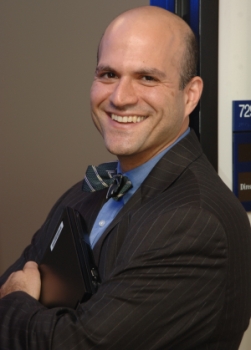
Farzad Mostashari, MD, ScM
Farzad Mostashari, MD, ScM serves as National Coordinator for Health Information Technology within the Office of the National Coordinator for Health Information Technology at the U.S. Department of Health and Human Services. Farzad joined ONC in July 2009.
On April 8, 2011, Christine LaFave Grace and Joseph Conn wrote a story for Modern Healthcare titled “Healthcare leaders hail selection of Mostashari to lead ONC.”
Joseph Conn of Modern Healthcare did an interview with Farzad Mostishari at the HIMSS11 conference in Orlando on February 21, 2011.Mary Mosquera, of Government Health IT, reported on April 8, 2011 that Mostashari “has been named the National Coordinator for Health IT, stepping in to the role at a critical juncture in the adoption of electronic health records and the meaningful use program. He has been the deputy national coordinator for programs and policy at the ONC.”
Robert Lowes reported for Medscape on April 8, 2011 “New EHR Czar Understands Technology Roll-Out.”
Looking Back: Related Articles
Related NY Times article, Feb 28, 2009: “How to Make Electronic Medical Records a Reality”
Two articles co-authored by Mostashari in Health Affairs March/April 2009 edition on Electronic Health Records and HITECH:
“A Tale Of Two Large Community Electronic Health Record Extension Projects”
“Collecting And Sharing Data For Population Health: A New Paradigm”
Only abstracts may be available from Health Affairs without registration and payment.
Dr. David Blumenthal Posts “ONC’s Surprising FACAs” on Health IT Buzz Blog
April 7, 2011, 3:25 pm / Written by Dr. David Blumenthal / National Coordinator for Health Information Technology
Republished by e-Healthcare Marketing below.
 I am often asked what has surprised me most during my tenure as National Coordinator for Health Information Technology. There have been many surprises, but one thing clearly stands out: the extraordinary contributions of our Federal Advisory Committees (FACAs) and their many workgroups
I have served on, and been advised by, lots of volunteer committees in both the private and public sectors. Some have been helpful, some less so. But nothing prepared me for the magnificent way our Health Information Technology Policy Committee (HITPC) and Health Information Technology Standards Committee (HITSC) have performed, and the role they have played in implementing the HITECH Act. My hat’s off to the wise legislators who created these two statutory bodies under HITECH. And my deep thanks goes to the chairs and co-chairs of the committees, to the dedicated citizens and federal officials who have served on the FACAs and their workgroups over the last two years, as well as to Judy Sparrow, the ONC manager of our Federal Advisory Committees process.
As of the end of March, Judy had organized 368 meetings of the FACAs or their workgroups: the equivalent of a meeting every other day over a two-year period. Assuming three-hour meetings attended by 15 people (and many are longer and bigger), that amounts to more the 16,500 person hours of some of the most talented health information technology (HIT) experts in the country. The sheer volume of this work is extraordinary. But equally impressive have been their specific recommendations. These meetings have directly influenced numerous key policy decisions and regulations by the federal government. For example:
Beyond these critical suggestions that have already influenced policy, the committees continue to generate wise, thought-provoking recommendations that ONC will carefully consider in the future. For example:
ONC’s advisory groups have made and will continue to make many other contributions. All have taken shape in open meetings with opportunities for public comment. Indeed, in some ways, our FACAs have made policy development at ONC wiki-like – a ground up, participatory process in which the federal government has facilitated the work of a vast community of citizen experts.
This experience with the ONC FACAs raises the general question of why some federal advisory committees are more successful than others, but some key factors seem to have played a role. The HITECH legislation and the meaningful use framework gave the committees concrete deliverables and timelines. This made it easier to set priorities and push to consensus on numerous, complex, and potentially divisive issues. A second factor may have been the nature of the HIT community. Its members believe passionately in the value of information to make health and health care better, and they are ready to commit personal time and set aside personal agendas in service of creating a modern, electronic health information system for the United States.
Regardless of the reasons, the ONC FACAs have been a wonderful surprise. We could never have accomplished what we have without them. If HITECH reaches its potential, a lot of the credit will go to the hundreds of dedicated citizens who have contributed thousands of person-hours to make health care better for all Americans through HIT.
###
In the January 2011 Annual Meeting of eHealth Initiative in Washington, DC, this blogger had the privilege of asking Dr. Blumenthal the first question after the National Coordinator delivered a keynote address. In short the question was “What’s most surprised you in your tenure as Coordinator?” Dr. Blumenthal paused for a moment, appearing to reflect, seemed to indicate it was the first time he had been asked the question, and he answered that the tremendous volunteer effort of the Health IT community in supporting the Office of the National Coordinator was the most surprising.
Ross Martin speaks to a new generation of docs
The Meaningful Yoose Rap from Ross Martin on Vimeo.
Complete Listing of ONC Sessions and Materials Available at HIMSS11 Excerpted from ONC site Feb 20, 2011

The Healthcare Information and Management Systems Society (HIMSS) is hosting its 11th annual conference in Orlando February 20 to 24, 2011. As in previous years, ONC is exhibiting and participating in a variety of events that include pre-conference symposia, educational sessions, and workshops.
Click here for this information on the ONC site.
Check out the Health IT Buzz Blog for the latest news and updates from ONC. Read the most recent posts on ONC’s participation at HIMSS and tell us about your experiences at this year’s conference!

ONC-CMS Booth: Hall A, Booth #706
 Visit the ONC and the Centers for Medicare & Medicaid Services (CMS) booth located in Hall A, Booth #706 to learn more about nationwide health IT initiatives! The booth will feature information on various ONC programs and staff will be on hand to talk with attendees about the many innovative ways ONC is supporting the adoption of health information technology.


